
Air conditioner leaking water: causes and what to do
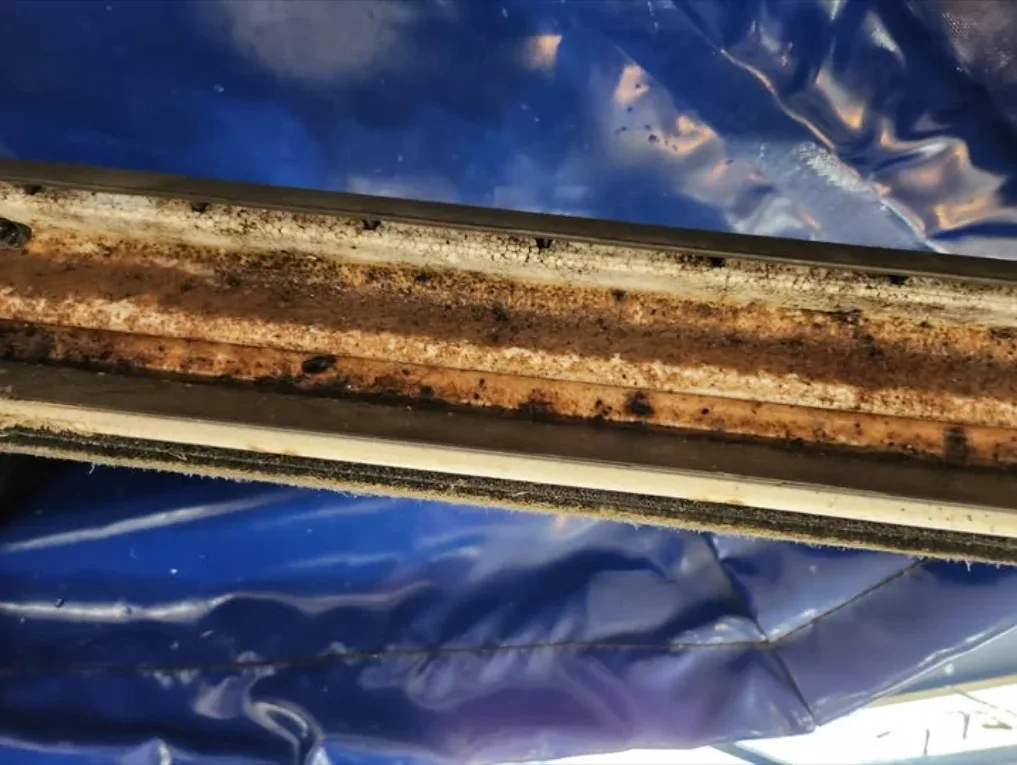
Switch the system off at the isolator or breaker. Put a container and towels underneath. Move furniture, bedding and electricals out from below. Water running inside a wall or ceiling cavity costs far more to repair than the leak itself, so stopping it takes priority over working out why.
Water dripping from an indoor unit is almost always a blocked condensate drain, and clearing that is part of what we do on every job. A handful of other causes are worth knowing about too, and we identify which one you’re dealing with before any work starts.
The most common cause: a blocked drain
How the drain is supposed to work
When your system cools, moisture condenses on the evaporator coil and runs down into a drain pan below it. From there it flows by gravity through a small pipe to outside. On a humid day a hard-working system can produce a surprising volume of water, and all of it depends on that one narrow line staying clear.
What blocks it
Biofilm, mostly. It’s the same standing water that often produces a sour or musty smell from the unit. Fine dust washes off the coil into the pan, mixes with standing water, and forms a slime that gradually narrows the line from the inside. Add insects nesting in the outlet, leaf litter and garden debris at the discharge end, and eventually the flow can’t keep up with what the coil is producing.
The pan overflows, and the water goes wherever gravity takes it: down the wall, into the plasterboard, or across the ceiling below on an upstairs unit.
How to tell it’s the drain
Other causes worth ruling out
A soiled coil causing ice, then overflow
Heavy build-up on the coil restricts airflow across it. With too little warm air passing over, the coil can drop below freezing and ice forms. When the system stops, that ice melts all at once and overwhelms the pan. If you’ve seen ice on the indoor coil or pipework, this is likely, and it’s a cleaning issue. See why is my air conditioner not cooling.
Low refrigerant
A refrigerant shortage causes the coil to run colder than designed, which produces icing and the same melt-water overflow. This one sits on the refrigeration side rather than the hygiene side. If cooling is poor as well as leaking, it’s worth mentioning when you call so we can tell you what we think is happening.
Installation faults
The indoor unit needs to sit level, or fractionally tilted towards the drain, and the drain line needs continuous fall to the outside. Units mounted slightly out of level, or drain lines with a rise or a sag in them, will hold water and eventually overflow no matter how clean they are. Common on units that have been knocked or on lower-quality installs.
A damaged, kinked or disconnected drain line
Flexible drain hose can be crushed behind the unit, split with age, or work loose at the connection. If the line has come off inside the wall cavity, water discharges directly into the wall and you may see staining well away from the unit itself. This needs repair, not cleaning.
A cracked or corroded drain pan
Older units, particularly in coastal locations like Noosa and the Sunshine Coast where salt air accelerates corrosion, can develop cracks or rust through in the pan. Water then bypasses the drain entirely. Replacement is the only fix, and on a very old system it’s often the point where replacing the unit makes more sense.
Condensation on the casing itself
In very humid conditions, moisture can condense on the outside of the unit or on the refrigerant pipework where insulation has degraded, and drip from there. If the water is on the outside of the casing or running along the pipes rather than coming from inside the unit, this is likely, and re-insulating the pipework is the fix.
Leaking now?
Call us and we’ll identify the cause. Most leaks come down to a blocked drain, which we clear and flow-test as part of the job.
What you can safely do yourself
What not to do: don’t push wire, rods or anything rigid up the drain line. It’s thin-walled and easy to puncture or dislodge, and a damaged line inside a wall cavity turns a small problem into a much larger one. Don’t keep running the system hoping it clears.
Drain maintenance that prevents it
Blocked drains build up gradually, which means they’re one of the more preventable faults. The drain pan and line are flushed and flow-tested as a standard part of every clean we do, which is the main reason systems on a regular service schedule rarely leak.
Between services: check the outlet discharges on humid days, keep the area around it clear, and run fan mode before shutting down so less water sits in the pan overnight. See how to prevent mould in your air conditioner, since the same standing water drives both problems.
What we do about a blocked drain
We clear the pan, flush the line properly and confirm flow at the outlet, then clean the coil and fan while the unit is open, since the material that blocked the drain came off them in the first place. Clearing the line without cleaning the source just resets the clock.
Full sequence in what’s included in a professional clean, and service detail on split system, ducted and cassette pages. Cassettes are worth a specific mention: they usually have a condensate pump rather than gravity drainage, and a failed pump or float switch is a different fault to a blocked line.
When it isn’t a cleaning problem
A small number of leaks come from a cracked pan, a unit mounted out of level, a drain line disconnected inside the wall, or a failed condensate pump. We identify these during our inspection and tell you exactly what we found and what needs doing, rather than charging you for a clean that wouldn’t have stopped the leak.
Check for damage afterwards
Once the leak is fixed, look at what the water reached. Damp plasterboard, swollen skirting, stained ceilings and wet carpet underlay all need drying out properly, because a wall cavity that stays damp will grow mould of its own regardless of how clean the air conditioner is. For rental and managed properties, document it with photos, which is what we provide for property managers and body corporate clients as standard.
Common questions
Why is my air conditioner dripping water inside?
Most often a blocked condensate drain, so the pan overflows instead of draining outside. Other possibilities are icing from a soiled coil or low refrigerant, a unit not sitting level, or a damaged drain line.
Can I keep using it while it’s leaking?
We’d advise not. Every hour it runs adds more water, and water in a wall or ceiling cavity causes damage that costs far more than the repair. Switch it off at the isolator until the cause is identified.
Can I unblock the drain myself?
You can clear debris from around the outlet outside. Don’t push anything rigid up the line, since it punctures easily and a damaged line inside a wall is a much bigger job. Blockages are usually well inside the line and need flushing properly.
Why does it only leak on humid days?
Because more moisture condenses out of humid air, so the drain has more water to carry. A partly restricted line copes on a dry day and overflows on a wet one. It’s a strong sign the line is narrowing rather than fully blocked, and worth acting on before it blocks completely.
Is a leaking air conditioner dangerous?
The water itself is condensate, not refrigerant. The risks are practical: water near electrical components and wiring, and damage to the building. Switch it off at the isolator and keep the area below clear.
How much does it cost to clear a blocked drain?
Drain clearing is included as part of a standard clean rather than charged separately, and a split system clean starts at $140. Current rates are on the pricing page. If the cause turns out to be a cracked pan or a mechanical fault, we’ll tell you before doing any work.
This article is general information, not advice for your specific system. Every make and model differs, so check your manufacturer’s handbook before carrying out any maintenance yourself. If you are not confident at any point, stop and have the work done professionally. Spotless Clean Air Services accepts no responsibility for damage or injury arising from work carried out by the reader.
Spotless Clean Air Services holds a Certificate II in Air Conditioning Hygiene accreditation. Blocked drains are among the most common callouts we attend, and among the most preventable.