
Professional vs DIY air conditioner cleaning: which is better?
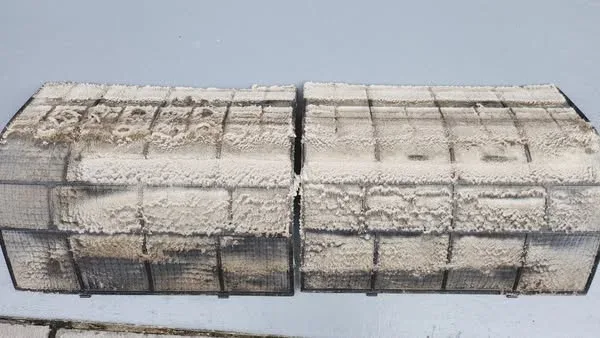
We clean air conditioners for a living, so you’d expect us to say always call a professional. The honest answer is more useful than that: there’s real maintenance you should be doing yourself, and there’s a part of the job that can’t be done from the outside. Knowing which is which saves you money and avoids damage.
The honest short answer
DIY handles maintenance. Professional cleaning handles what’s built up inside. They aren’t competing options, they’re two halves of the same schedule.
If your unit is a few years old, gets used regularly, and you’ve never had it opened up, no amount of filter washing will get it clean. If it’s newer and you’re diligent with the filters, you may genuinely not need us yet.
What DIY cleaning genuinely achieves
Washing the filters properly, every few weeks while the system is running, does more than people give it credit for. It restores airflow that a loaded filter was choking, and it slows how fast dust reaches the coil behind. Wiping the louvres and outer casing keeps visible growth in check. Clearing leaves and growth from around the outdoor unit helps the whole system shed heat.
That’s real, worthwhile maintenance, and it’s free. Our step-by-step guide to cleaning a split system walks through exactly how to do it without causing damage.
What DIY cleaning cannot reach
Behind the filter sits the evaporator coil. Behind that sits the barrel fan. Underneath both sits the drain pan and the line running out of it, and reaching all three is what a professional split system clean is for. That’s where contamination actually accumulates. The back face of the coil, the depth of the fin pack, the drain pan and the condensate line cannot be reached at all with the casing on, and while a strip of the barrel fan is visible through the outlet, cleaning it properly means getting to the whole circumference.
This is why a unit can smell musty a day after you’ve washed the filters. The filters were never the problem. We explain the anatomy in detail in why cleaning your air conditioner filter isn’t enough.
Side by side
Where DIY commonly goes wrong
Water into the electronics
The control board on most splits sits at one end of the indoor unit, behind the casing, close to the coil. Spraying water into an assembled unit from the front is the fastest way to turn a cleaning job into a board replacement. This is the single most expensive DIY mistake we get called out to.
Bent coil fins
Coil fins are thin aluminium and bend if you brush across them or poke a vacuum nozzle between them. Once flattened, they restrict airflow permanently and can’t be straightened without specialist tools.
Aerosol coil cleaners with nowhere to drain
The cans sold as “aircon cleaner” work by foaming into the coil and draining out through the condensate line. If the drain is already restricted, which it often is in a unit that needed cleaning, the residue and whatever it loosened has nowhere to go except the pan and eventually your wall. They also don’t touch the barrel fan.
Warranty and insurance
It’s also worth knowing what a professional clean actually costs before deciding the risk is worth it. Most manufacturer warranties cover the equipment, not damage caused by someone dismantling it. Check your handbook before you take a unit apart. If something goes wrong while a professional is doing the work, that’s what their insurance is for, which is worth asking about before anyone touches your system.
When DIY is genuinely enough
When it’s worth calling someone in
Mould specifically is worth reading up on before you attempt it, because the wrong approach can spread it rather than remove it. See can you remove mould from an air conditioner yourself.
Cost against value over time
A professional clean on a single split starts at $140 and is a once-a-year job for most homes. Set against that, the two costs neglect actually produces are water damage from a blocked drain, and a system running longer than it needs to because airflow across the coil is restricted.
Whether that maths works for your situation is a fair question, and we’ve answered it properly in is air conditioner cleaning worth it, including the cases where our answer is no. Current rates are on the pricing page.
Keep doing the filters. We’ll do the rest.
If your filters are clean and it still smells, the cause is behind them. Fixed price, quoted before we start.
Common questions
Can I clean my air conditioner myself?
You can and should clean the filters, the accessible louvres and the casing, and keep the outdoor unit clear. What you shouldn’t do is dismantle the unit or spray liquid into an assembled one. The line sits at the casing.
Are the supermarket aircon cleaning sprays any good?
They can freshen a lightly soiled coil if the drain is flowing freely. They don’t reach the barrel fan, which is usually where the smell is coming from, and on a restricted drain they make the situation worse. They’re not a substitute for opening the unit up.
Will DIY cleaning void my warranty?
Washing filters won’t. Dismantling the unit may, and damage you cause while doing it almost certainly isn’t covered. Check your own handbook, since terms differ between manufacturers.
How much of the job can I actually do?
Roughly the maintenance half: filters, surfaces, outdoor unit, and drying the system out after use. The other half, the coil, the barrel fan and the drain line, needs the unit open. Both halves matter.
If I clean it myself regularly, do I still need a professional clean?
Less often, yes, but not never. Consistent filter maintenance genuinely extends the interval. It doesn’t stop condensation forming on the coil or biofilm building in the drain, which is what the annual clean addresses.
Spotless Clean Air Services holds a Certificate II in Air Conditioning Hygiene accreditation. The DIY problems described here are ones we’ve been called out to after the fact, not hypotheticals.