
Why does air conditioner mould keep coming back?
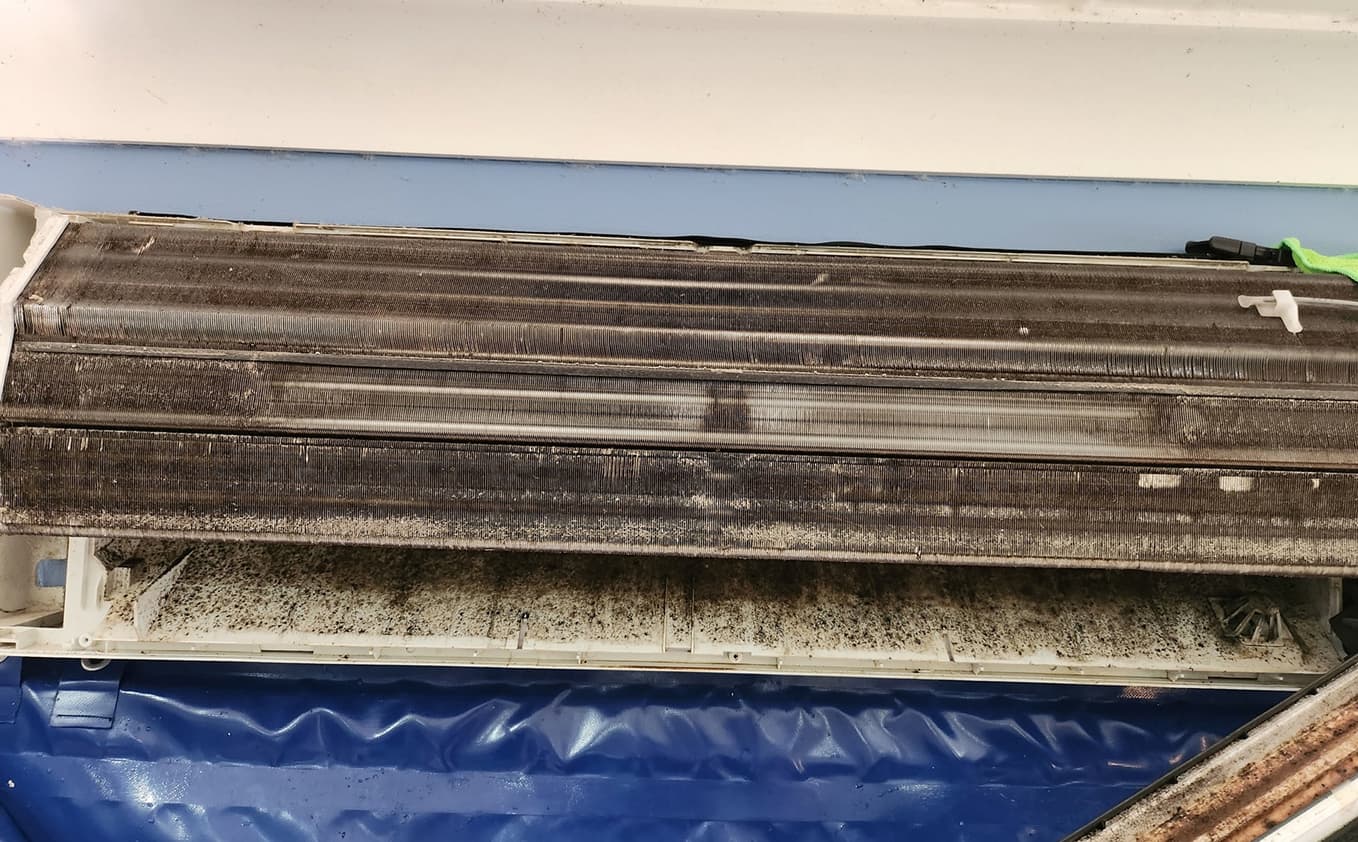
If you’ve had your air conditioner cleaned and the musty smell was back within a month, that’s frustrating and it isn’t normal. A proper clean should hold for the full service interval. When mould returns quickly, it’s almost always because something is still feeding it, and it’s usually one of seven things.
Why a clean sometimes doesn’t hold
Mould needs three things: moisture, something organic to feed on, and a dark still place to sit. A clean removes the food source. If the moisture is still there and the clean missed a surface, growth re-establishes from whatever was left behind, using the same condensation as before.
So the question isn’t really why it came back. It’s what wasn’t addressed the first time.
The usual reasons
1. The clean never reached the source
This is the most common explanation by a wide margin. If the unit wasn’t opened up, the barrel fan wasn’t properly cleaned. That fan is the most contaminated component in most systems and sits directly in the airflow. Only a narrow strip of it is visible through the outlet, so working from the front reaches a fraction of the surface and leaves material packed deep in the blades untouched. A clean that covered filters, louvres and a visible coil face has left the actual source in place.
Ask what was physically removed during the job. If the casing stayed on, that’s your answer, and what you need to know before you book explains why. What’s included in a professional clean sets out what should have happened.
2. It was a treatment, not a clean
Sanitising sprays and foaming cleaners applied over existing build-up achieve very little, because they never contact the surface underneath. The order matters: physically remove the material first, then treat the clean surface. Reversed, you get a few weeks of improvement and then the smell returns.
3. The drain is still partly blocked
A restricted condensate line means water sits in the drain pan between uses instead of clearing. Standing water is a permanent reservoir, and it will recontaminate a spotless coil above it within weeks. If the drain wasn’t flushed and checked for flow, the clean was always going to be temporary. Related: air conditioner leaking water.
4. The system never dries out
If the unit is switched off straight from cooling, the coil is left soaking wet in a dark enclosed space for hours. Do that every night and you’ve recreated ideal conditions regardless of how well it was cleaned. Running fan or dry mode for fifteen to thirty minutes before shutdown is the single most effective habit change, covered in how to prevent mould in your air conditioner.
5. Room humidity is the real driver
In a persistently damp room, a bathroom without decent extraction, an unventilated space, a closed-up holiday home through a wet season, the air itself keeps every surface damp. This is a recurring issue in holiday and short-stay properties that sit empty between bookings. The air conditioner is the thing you notice it in, but it isn’t the cause. Address the room and the system stays cleaner far longer.
6. Water is getting in from somewhere else
Occasionally there’s a mechanical reason the inside of the unit stays wetter than it should: a cracked or badly sloped drain pan, a unit not mounted level, an insulation gap letting condensation form where it shouldn’t, or a refrigerant issue causing icing and then excess melt water. These need diagnosing rather than cleaning, and a refrigerant fault needs a licensed refrigeration mechanic.
7. Filters going back dirty or damp
A small thing that matters more than people expect. Refitting a filter before it’s fully dry introduces moisture straight back into a clean unit, and a filter that’s torn or distorted lets dust bypass it onto the coil you just paid to have cleaned.
The parts most often missed
How long a proper clean should hold
Six to twelve months, matching the normal service interval for how the system is used. Longer in a dry inland location with light use, shorter in a humid coastal spot running most of the year.
If a smell returns inside two months, that isn’t the interval being short. Something was missed, or one of the moisture sources above is still active.
Had it cleaned and it’s back?
We’ll assess what was missed and what’s keeping it damp, and tell you honestly if the cause sits outside the unit. Fixed price before we start.
What actually breaks the cycle
Casing off, barrel fan cleaned properly. Without this, nothing else matters.
Flushed and tested, not just glanced at. No standing water in the pan.
Fan or dry mode before shutdown, every time. Free, and it changes the environment permanently.
Every two to four weeks in season, fully dry before refitting.
Ventilation, extraction, or a dehumidifier if the space genuinely needs one.
When it isn’t coming from the air conditioner at all
Worth ruling out before you pay for a third clean. Run the system in fan mode only: if there’s no smell, the unit is probably not the source. Switch it off entirely for a day and see whether the room still smells damp.
A roof leak, a plumbing leak in a wall, rising damp, a saturated subfloor or mould behind furniture will all keep a room smelling musty no matter how clean the air conditioner is. If we assess a system and find it clean, we’ll tell you to look elsewhere rather than clean it again.
When to have the system assessed rather than cleaned again
If growth has returned twice after cleaning, stop booking cleans and get the cause identified. A thorough split system clean starts with that assessment rather than going straight to the coil. That means checking the drain properly, confirming the pan and mounting, and looking for a mechanical reason the unit stays wet. Occasionally, where growth has taken hold in insulation or duct linings, the affected material needs replacing rather than cleaning, and that’s a different conversation we’ll have honestly with you.
Common questions
How long should an air conditioner stay clean?
Six to twelve months, depending on how hard the system works and how humid the location is. That’s the interval a proper clean should deliver.
Why did the mould return within a month?
Most likely the barrel fan wasn’t cleaned, or the drain is still restricted so water sits in the pan. Both leave a source in place that recontaminates everything else. Ask whether the casing was removed and whether the drain was flushed.
Will a second clean fix it?
Only if it addresses what the first one missed. A more thorough clean that reaches the fan and clears the drain generally does. Repeating the same partial clean will get the same result.
Could the mould be coming from somewhere else?
Yes, and it’s worth checking. Run the system in fan mode only and see if the smell is still there. If the room smells damp with the system off entirely, look at ventilation, leaks and the building itself before cleaning the unit again.
Do sanitising treatments stop it returning?
A treatment applied to a properly cleaned surface helps. Applied over existing build-up it does very little, because it never reaches the surface. It isn’t a substitute for physically removing the material, and no treatment overrides a system that stays permanently wet.
Is this more common in holiday lets and rentals?
Yes, for two reasons. Systems run hard and get switched straight off, and nobody is doing the fortnightly filter maintenance. We run scheduled six-monthly programmes for accommodation providers and property managers for exactly that reason.
Spotless Clean Air Services holds a Certificate II in Air Conditioning Hygiene accreditation. The reasons listed here are what he finds when opening up systems that have been cleaned recently by someone else.