
Why does my air conditioner smell? Causes and how to fix it
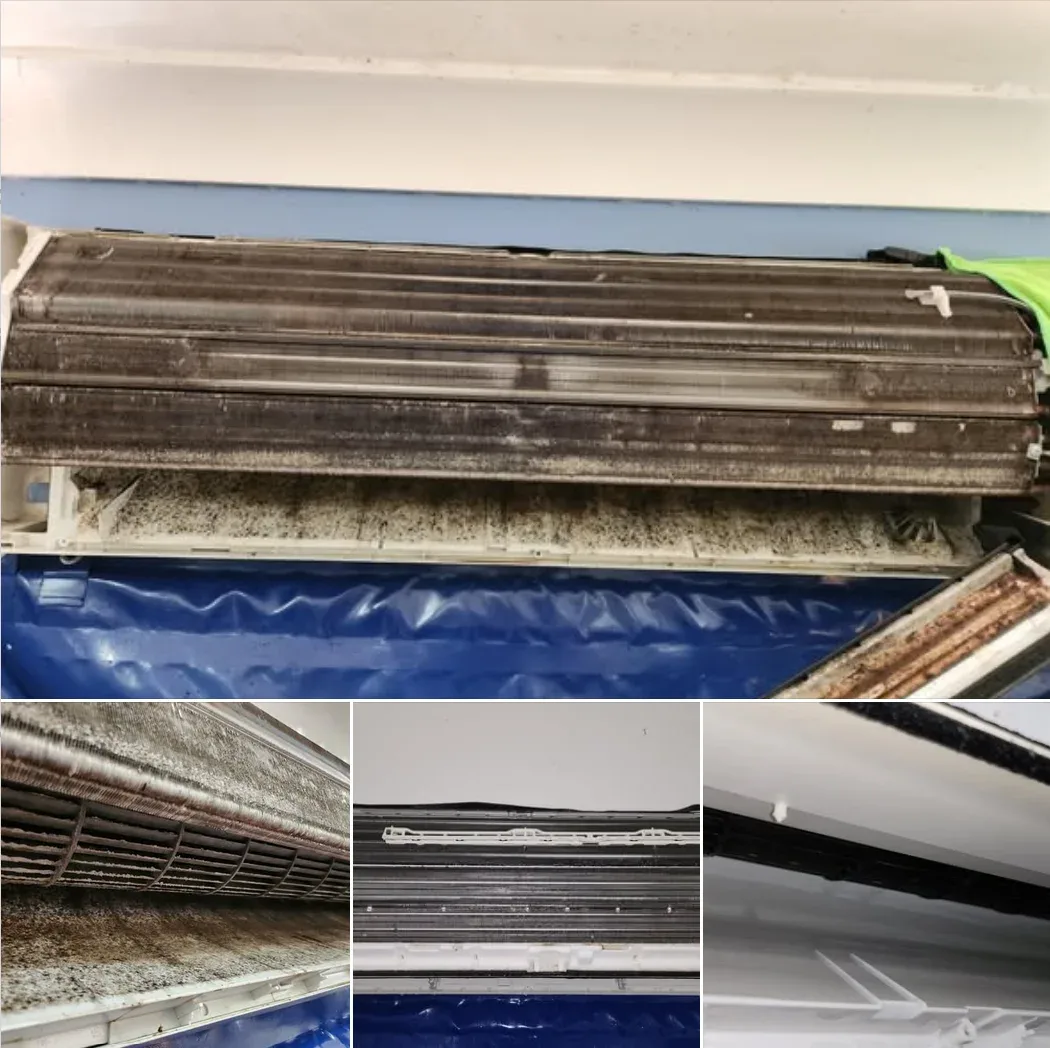
The smell itself tells you most of what you need to know. A musty smell means something is growing on a damp surface inside the unit. A burning smell means switch it off. Work out which one you’ve got, and the right response follows.
A sharp electrical or burning-plastic smell means turn the system off at the isolator and have it looked at straight away. That one isn’t a cleaning matter and it isn’t something to wait on.
Start with the smell itself
Musty or damp, like a wet towel
The most common complaint we’re called about. It usually points to mould or bacterial growth on the evaporator coil, the barrel fan or in the drain pan, since all three stay damp after the system runs, sit in the dark and collect dust. Worth ruling out other damp sources in the room first, though, because a musty wall cavity, damp carpet or poorly ventilated space can smell much the same once the air is moving.
The fix: the unit needs opening up and those surfaces cleaned. Washing the filters won’t touch it, so where contamination on those surfaces is the cause, the smell returns once the system runs again. Background in why does mould grow inside air conditioners.
Sour or vinegary
Often the same underlying cause as musty, just a different mix of what’s growing. Bacterial activity in standing water in the drain pan tends to smell more sour than musty, and it’s typically worse where the drain is slow so water sits rather than clearing. Some cleaning products and new filters can also smell faintly sour for a short period, so timing is a useful clue.
The fix: clean the internal surfaces and flush the drain line so water isn’t sitting in the pan between uses. A slow drain usually shows itself in other ways first, which we cover in why an air conditioner leaks water.
Rotten, or like sewage
Several possibilities worth working through. Heavily fouled standing water in a blocked drain pan is one. A drain line connected into the plumbing waste without a proper trap is another, letting sewer gas back up the pipe. An animal or insect nest inside the unit or ductwork turns up occasionally. It’s also worth checking whether the smell is present when the system is off, which usually points away from the unit entirely.
The fix: we can clear and clean a fouled pan and drain. If it turns out to be an untrapped drain connection, that’s a plumbing correction and we’ll tell you so rather than cleaning around it. Related: air conditioner leaking water.
Burning, or hot dust
There’s an important distinction here. A faint hot-dust smell for the first few minutes after switching to heating for the first time in months is commonly just dust burning off internal surfaces, and it clears within a cycle or two. A sharp burning-plastic, ozone or electrical smell at any other time is not normal, and while it can have several causes it isn’t one to work through yourself.
The fix: for the sharp electrical smell, switch off at the isolator and have the system inspected straight away rather than continuing to run it.
Sweet or chemical
A faintly sweet or solvent-like smell, particularly alongside poor cooling or ice on the pipework, more often relates to the refrigeration side of the system than to contamination inside it. New plastics, recent painting or cleaning products in the room can produce something similar, so it’s worth considering what else has changed.
The fix: this one sits with the refrigeration side rather than a clean. If the system also isn’t cooling properly, see why is my air conditioner not cooling.
Cigarette smoke, cooking or pet odours
Air conditioners pull room air across a wet coil, so they collect and hold whatever is in the air. Smoke residue and cooking oils are tacky, bind to internal surfaces and then release back into the airflow every time the system runs. This is why a unit in a previously smoked-in home keeps producing the smell long after the smoking stopped.
The fix: a full internal clean, which physically removes the residue. Deodorising won’t, because the source is still coated onto the components. For a wall unit that’s a split system clean; ceiling cassettes and ducted systems hold residue across more surface area again.
Worse after rain or on humid days
This one is a strong indicator rather than a separate cause. Existing growth inside the unit becomes more active and more odorous in higher humidity, and damp air means more condensation forming inside, so surfaces stay wet longer. If your smell is noticeably seasonal, that points firmly at biological growth rather than anything mechanical.
The fix: internal clean, then prevention habits to keep surfaces drier. See how to prevent mould in your air conditioner.
Only in the first few minutes
A smell that appears on start-up and fades after five minutes is the classic signature of growth inside the unit. The first burst of airflow lifts accumulated odour off damp surfaces, then the concentration drops as the system keeps running. It fading doesn’t mean it’s resolved. It means you stopped noticing it.
How to be sure it’s the unit and not the room
Run the system in fan mode only, with no cooling. If the smell is still there, it’s coming from inside the unit or its ductwork. Then switch it off entirely for a few hours and see whether the room still smells. If the smell disappears when the system is off and returns within a minute of it starting, the unit is the source.
If the room smells damp regardless, you may have a separate moisture problem, and cleaning the air conditioner won’t fix that. Where it is the unit, a professional clean is what resolves it.
What you can try yourself
The method is in how to clean a split system air conditioner. Skip the aerosol coil cleaners and any air freshener aimed at the vents. They mask the smell for a day and add residue to the surface that’s causing it.
What actually clears an odour for good
Removing the material producing it. In practice that means the casing comes off, the coil is treated and flushed, the barrel fan is cleaned blade by blade, and the drain pan and line are cleared so water isn’t sitting there. Then a treatment goes on surfaces that are already physically clean, which is the only order in which it does anything useful.
A musty smell caused by internal growth is one of the most reliably solved problems we deal with. See what’s included in a professional clean. If it returns within weeks, something was missed or the drain is still restricted, which is covered in why does air conditioner mould keep coming back.
Tell us what it smells like
Describe the smell and when it happens, and we’ll tell you what’s causing it. Most odours come from surfaces inside the unit, and we resolve those at a fixed price quoted before we start.
Smells that mean switch it off straight away
These are the only smells that aren’t resolved by cleaning. Describe yours to us and we’ll tell you which category it falls into before you spend anything.
Keeping it from coming back
The single most effective habit is running the system in fan or dry mode for fifteen to thirty minutes before shutting it down, so the coil dries instead of sitting wet for hours. Add consistent filter washing and a clear drain, and most systems stay fresh between annual services. Full detail in how to prevent mould in your air conditioner.
Common questions
Why does my air conditioner smell musty?
Because mould or bacteria is growing on damp surfaces inside it, typically the coil, the barrel fan or the drain pan. Those surfaces stay wet after the system runs, which is exactly what growth needs. Cleaning them removes the smell.
Why does it smell like vinegar?
Usually bacterial growth in standing water in the drain pan, which smells more sour than musty. It’s common where the drain is slow or partly blocked so water sits between uses. Clearing the drain and cleaning the pan resolves it.
Why is the smell worse after rain?
Higher humidity makes existing growth more active and keeps internal surfaces damp for longer. The smell isn’t caused by the rain, it’s revealed by it. A seasonal pattern is a good sign the cause is biological rather than mechanical.
Why does it only smell when it first turns on?
The first burst of airflow lifts odour that has accumulated on damp surfaces while the system was off. It fades as the concentration drops, not because the cause has gone. It’s the most typical pattern for internal growth.
Is a burning smell dangerous?
A brief hot-dust smell when heating is used for the first time in months is generally dust burning off and clears in minutes. A sharp burning-plastic or electrical smell at any other time should be treated seriously: switch off at the isolator and have the system inspected before running it again.
Will an air freshener or deodoriser fix it?
No. It masks the smell for a day or two while leaving the growth producing it untouched, and adds residue to the surfaces involved. The only thing that clears an odour permanently is removing what’s causing it.
How long before the smell comes back after a clean?
A properly done clean should hold for the normal service interval, six to twelve months depending on use. If a smell returns quickly, it’s worth checking whether something was missed inside the unit, but conditions in the room matter too. High humidity, damp carpet or wall cavities, poor ventilation, cooking or pet odours can all be drawn through the system and mistaken for the unit itself. That’s covered in why does air conditioner mould keep coming back.
Spotless Clean Air Services holds a Certificate II in Air Conditioning Hygiene accreditation. Odour complaints are the most common reason customers call, and the smell descriptions here are the ones we hear and diagnose most often.